Agriculture: The silver bullet no one wants to recognise
Agriculture: The silver bullet no one wants to recognise
Agriculture and livestock have been the economic engines of this region for generations. With the diversity of our land and climate, as well as the Indus River System, Pakistan has been able to produce a wide variety of crops, fruits and livestock breeds. The sector contributes 23.5% of total GDP, employs more than 37% of the labor force, and accounts for a major share of exports, bringing in $23 billion in FY25 out of total exports of $32 billion, or 72%.
However, this must be analyzed in the global context. Although Pakistan has the world’s fourth-largest irrigated land area and the 11th-largest cultivable land area, it ranks only 36th globally in export value. Many lower-middle-income countries, including Vietnam, India and Côte d’Ivoire, as well as smaller countries that are one-tenth the size of Pakistan, export far more than we do. Take livestock, for example. In 2024, Pakistan produced 66 million tons of milk, the third-largest volume in the world, yet exported only $26 million worth of milk products, ranking 73rd globally. Similarly, Pakistan produced 8 million tons of fruit in 2024, ranking 18th in production, while exporting only $362 million worth, ranking 44th.
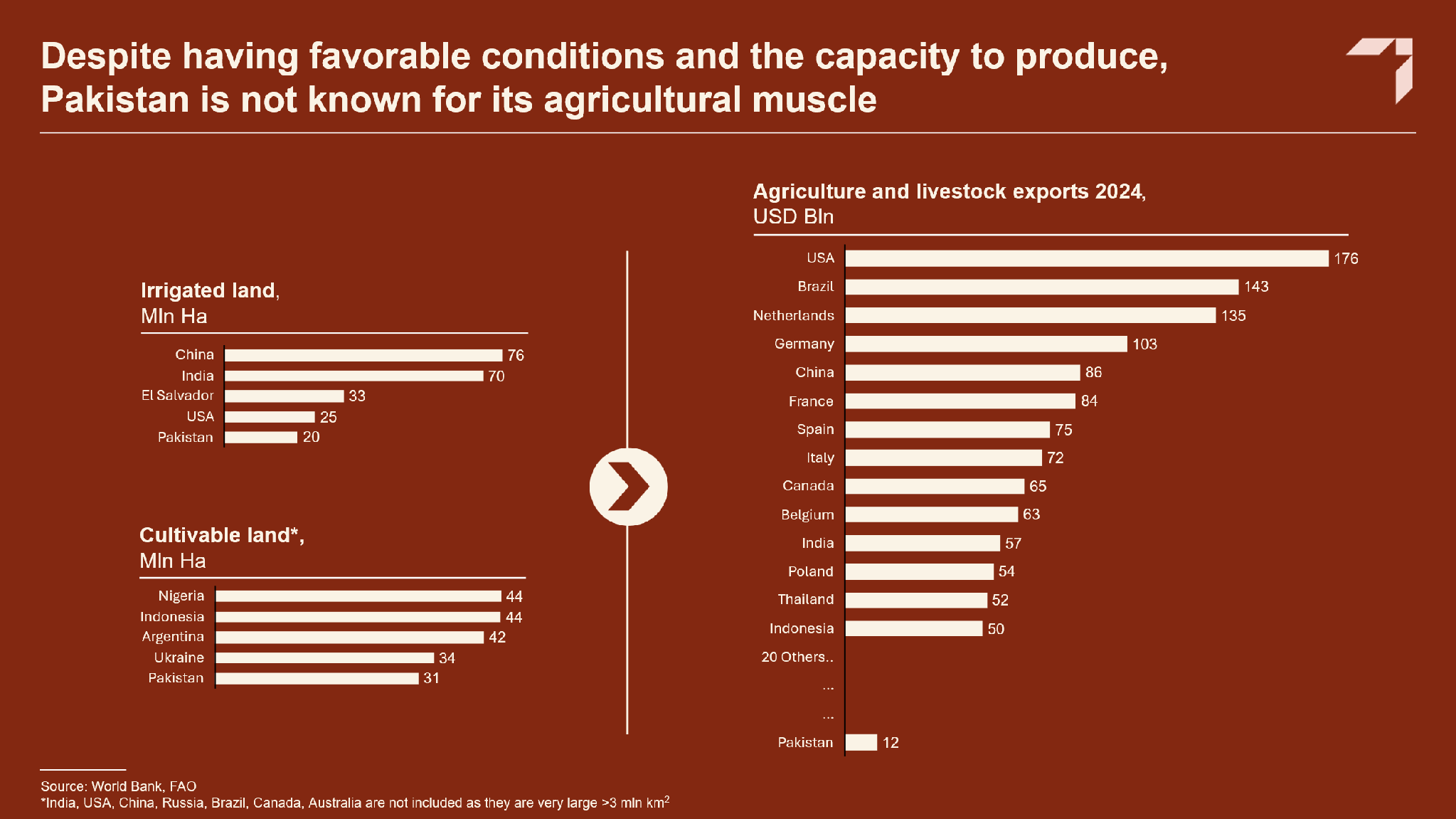
The same story plays out in sugarcane, wheat and meat, where Pakistan remains among the world’s largest producers but has little to show in exports. This indicates that we are a strong agrarian economy with solid foundations and substantial productive capacity, but our export competitiveness is exceptionally weak. What the budget and the structure of the agriculture sector tell though, is turning this around is not a priority.
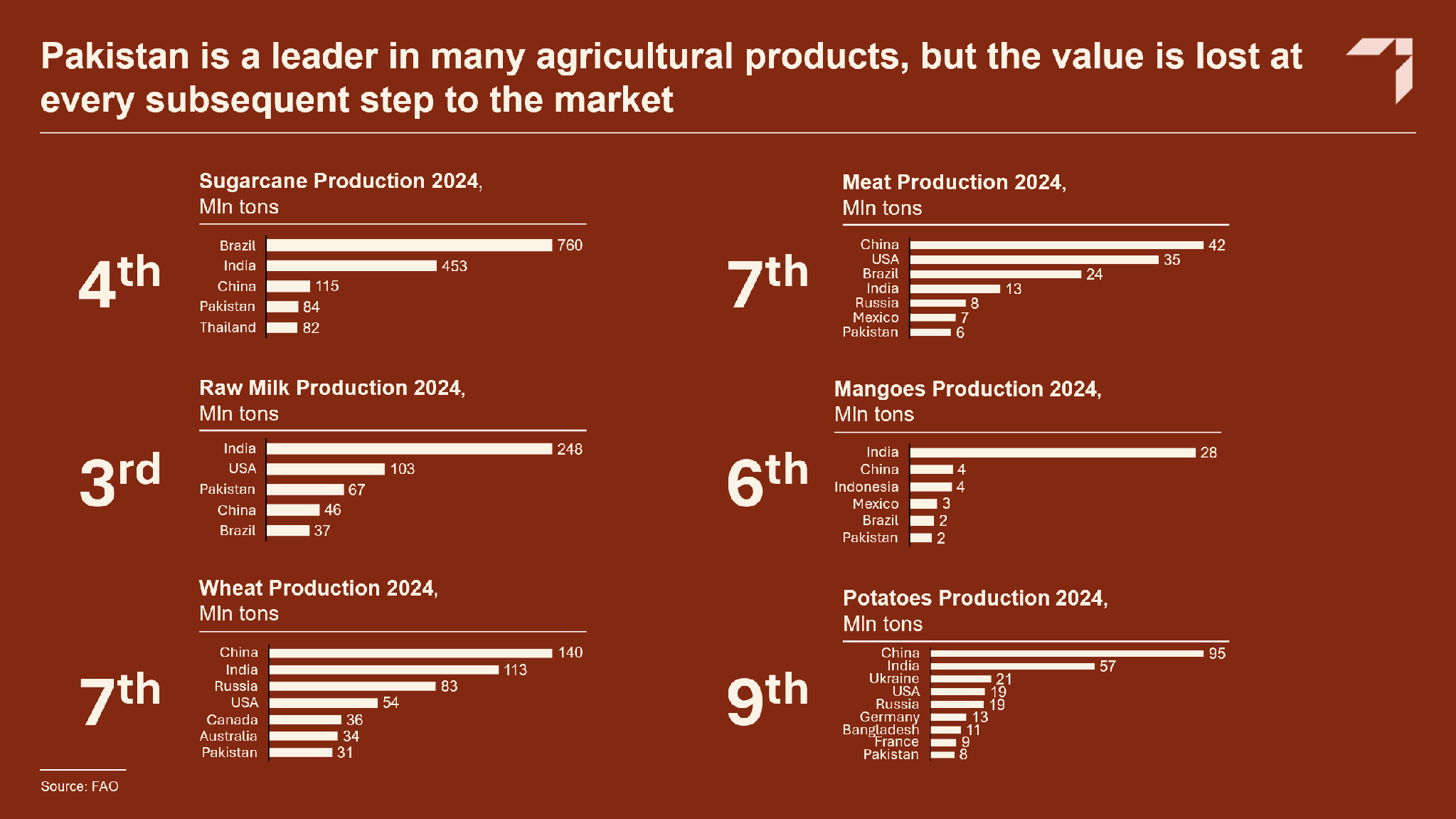
From low yields to adherence to food standards, Pakistan lags on major indicators of competitiveness. Infrastructure, including storage, supply chains, processing capacity, quality assurance capacity – all lag. Anyone who has lived abroad will tell you that the “Brand Pakistan” on supermarket shelves, in the Middle East and in the West, is weaker than other agri-focused countries, evidenced by the lower prices of Pakistani exports. For example, our mangoes, which we claim to be the best in the world, sell below the cost of those from countries like Mexico or Peru.
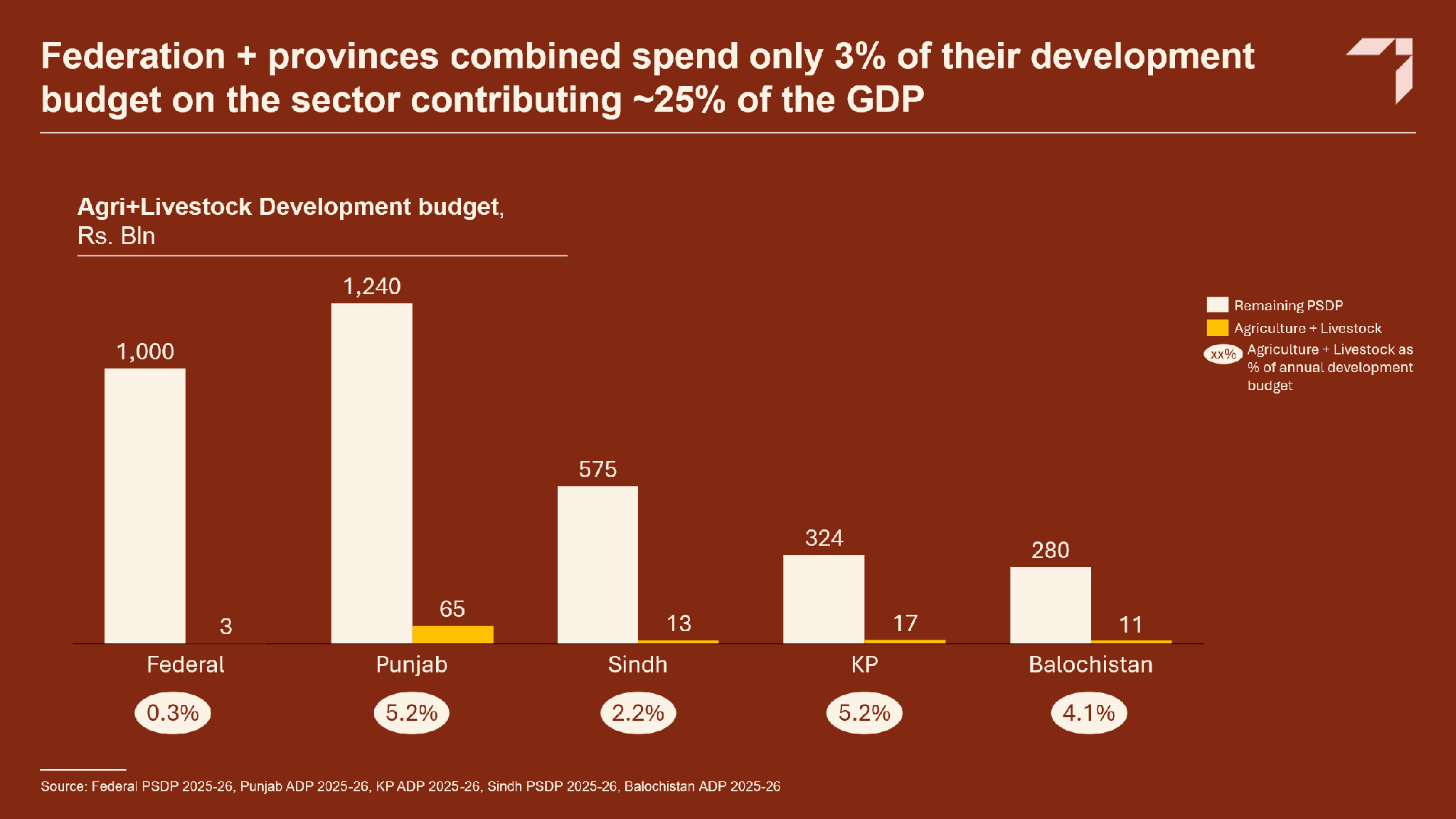
You would imagine transforming the sector commands some urgency but an analysis of development spending by the federal and provincial governments shows that agriculture and livestock have been allocated Rs. 109 billion out of a total development portfolio of Rs. 3,418 billion, or just 3.2%, for FY2025-26. Across Pakistan!
If Pakistan wants to supercharge agriculture and become a global juggernaut, it will need the right investments, the right partnerships and a medium-term support framework for farmers. Otherwise, instead of building on the sector that has long anchored our economy, we will remain trapped in a consumption-led model, continuing to search elsewhere for the silver bullet of economic prosperity.