Pakistan’s export problem is not just low volume; it is low complexity
.jpeg)
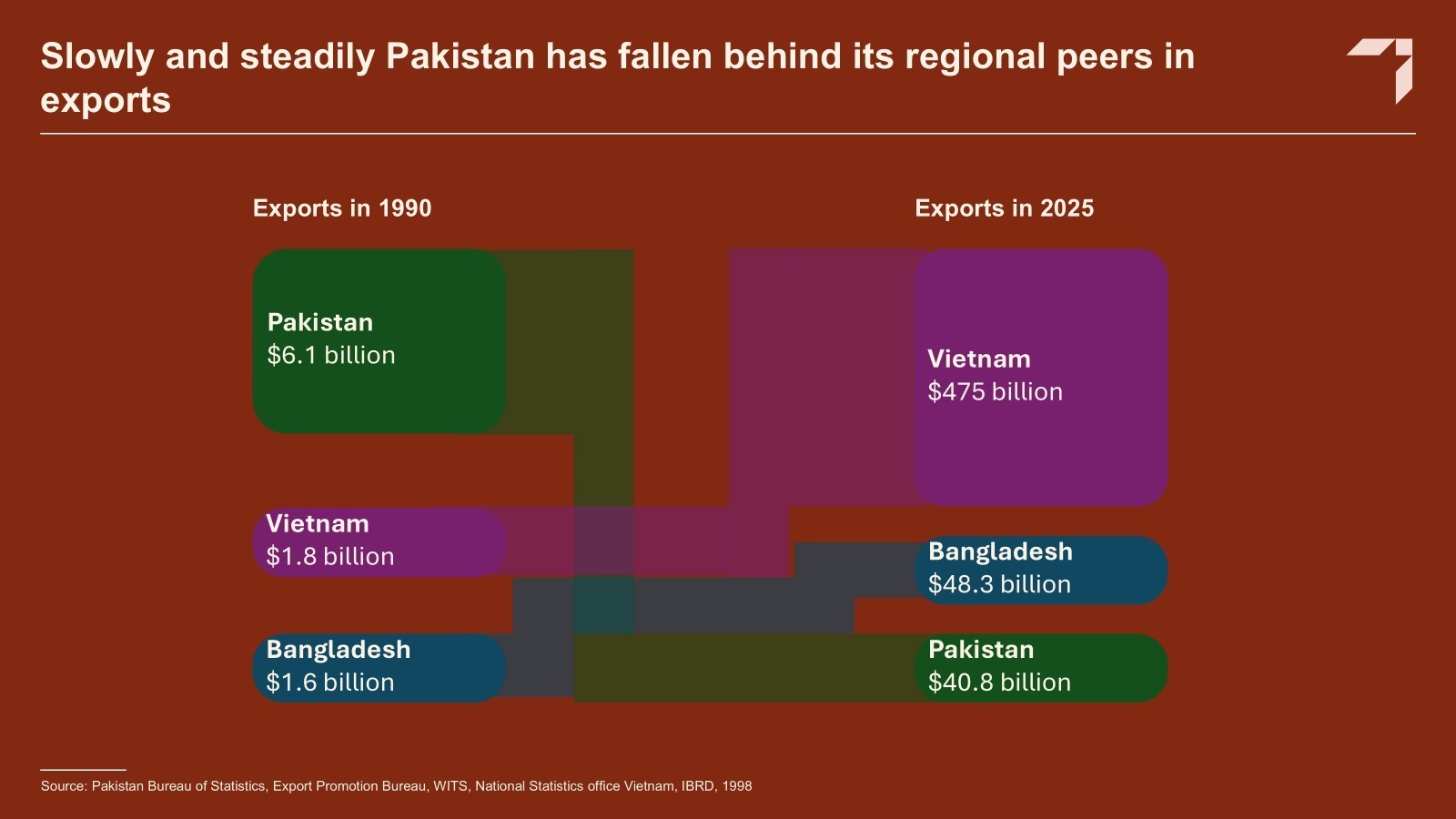
Pakistan's export problem is not just low volume; it is low complexity. In 1990, Pakistan exported $6.1 billion, Bangladesh exported $1.6 billion, while Vietnam exported $1.8 billion worth of goods. Fast forward to 2025 and the story has flipped: Pakistan exported $40.8 billion, Bangladesh exported $48.3 billion, while Vietnam exported $475 billion worth of goods. The key driver which made all the difference among these exports is complexity and value addition.
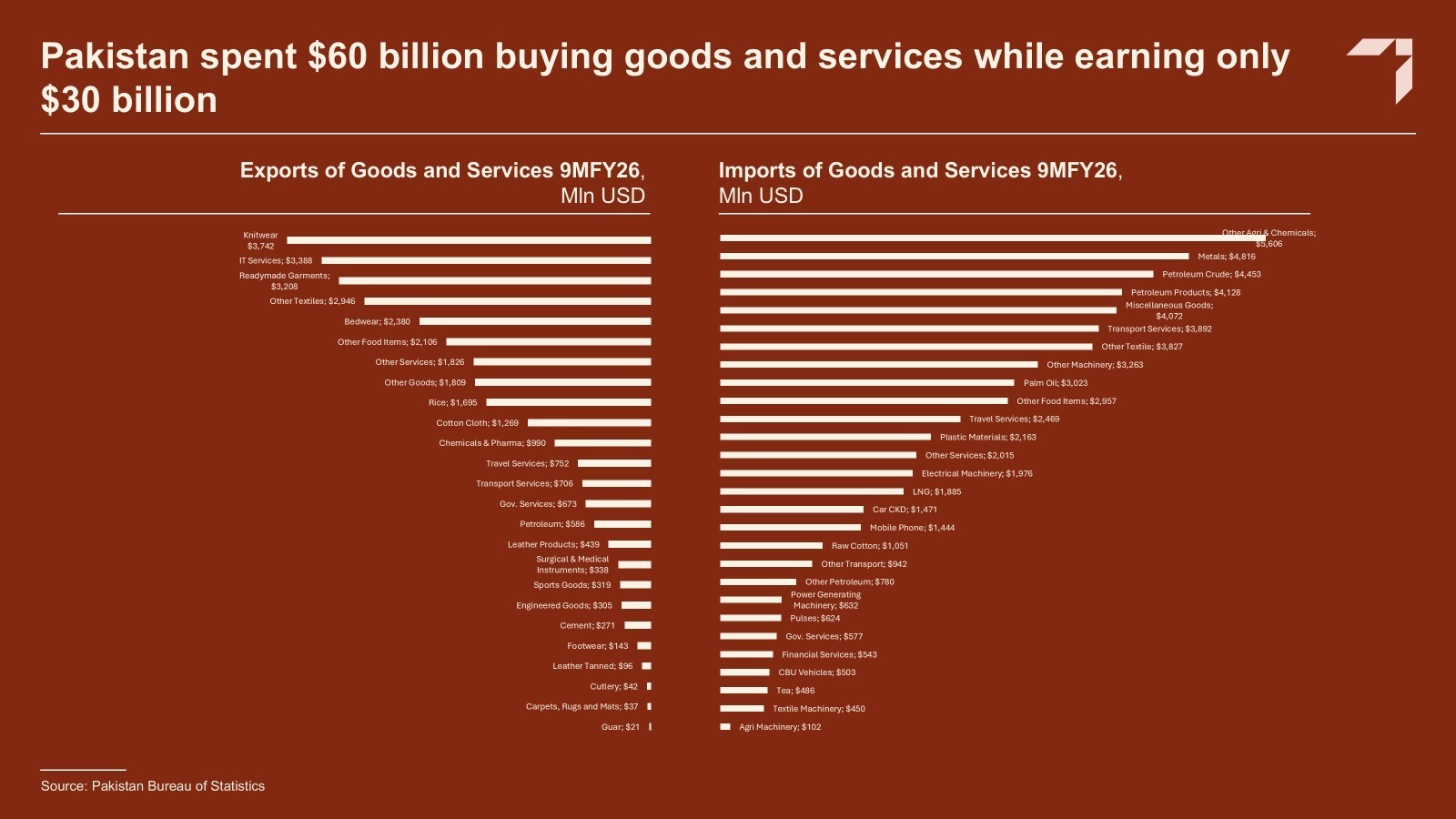
If we dive deeper into the data, Pakistan exported rice, cotton and textiles while Bangladesh mainly exported textiles and clothing while Vietnam exported agriculture products and light industrial goods. All were part of the same playing field in 1990. However, in 2025, Pakistan exported primarily bedwear, knitwear and readymade garments, Bangladesh exported apparel and seafood, while Vietnam took the lead through primary exports of computers, electronic products and parts. They export more than $100 billion worth of computer and electronic parts alone.
Another great example of becoming a global leader in exports is South Korea. In 1956, South Korea had exports worth $25 million, mainly agriculture products, 13x less than Pakistan. However, in 2025, it exported $710 billion worth of goods comprising chips, semiconductors and heavy industrial goods.
Vietnam and South Korea are countries that were devastated by wars in '75 and '53 respectively. They were dependent on aid and split into two countries. Yet, they turned around their economies through a series of economic reforms. At the heart of these reforms were trade liberalization, domestic reforms through deregulation, reducing cost of doing business, investment in human capital and investment in infrastructure, which includes ports, cheap energy and even the internet.
Unfortunately, Pakistan's policy approach has been in a state of constant flux throughout its history. From liberalization to nationalization, and then the energy crisis of the early 2010s, this persistent uncertainty has kept us at bay from the next level of development. Combined with one of the highest regional electricity prices, inconsistent tariff policies and high compliance costs, this unpredictability has left the private sector reluctant to explore new sectors or invest in vertical integrations.
Let's look at the tax regime for exporters. Until FY24, Pakistan operated a final tax regime under which exporters paid a flat 1% on export proceeds. This was then replaced by a minimum tax regime, under which an exporter may still be subject to normal taxable-income computation if their regular tax liability exceeds the minimum threshold. In the same year, an additional 1 percent advance tax was imposed on exporters of goods. Similarly, until FY19, export supplies/inputs were zero-rated, but this was shifted to a refund-based mechanism, requiring exporters to first pay the standard sales tax on their purchases and then apply for a refund — a change that significantly increased pressure on their working capital.
How can industry place any trust in a system that has subjected its exporters, the very backbone of the economy, to continuous policy changes over the past several years? Pakistan needs policy consistency that extends beyond a single budget cycle or change of government. A credible, long-term export strategy would lock in predictable tax treatment for at least five to seven years, restore a genuine zero-rating regime for export inputs rather than a refund mechanism that ties up working capital, and ensure that industrial electricity tariffs are competitive with regional peers rather than burdened with the cost of unused generation capacity. Equally important is a shift in mindset from viewing exporters as a convenient source of revenue during fiscal shortfalls to recognizing them as the primary engine of dollar inflows the economy depends on. Only when the private sector can plan five years ahead with reasonable confidence, rather than bracing for the next policy reversal, will it begin to make the kind of long-term investments in capacity, technology and sectors that genuinely supercharge exports.